Delirium Furiosum
Also check out the Daily Thread Archive
Behind my sister’s house in Bavaria, her small horse ranch sits wedged beside the railway. Trains pass at 80 miles an hour, close enough to feel in your chest. The horses don’t flinch.
They’re not indifferent by nature. Horses are prey animals, wired for a flight response to anything fast, loud, and unfamiliar — the same startle reflex that once saved their ancestors from predators still fires at a dropped bucket or a flapping tarp. A horse meeting a passing express train for the first time would, by instinct, want to run. The calm ones at that fence didn’t arrive that way. They were built through patient, repeated exposure — the same process trainers use to prepare police horses for sirens and crowds — until a nervous system that once read “fast and loud” as “danger” learned to read it as “nothing happens here.”
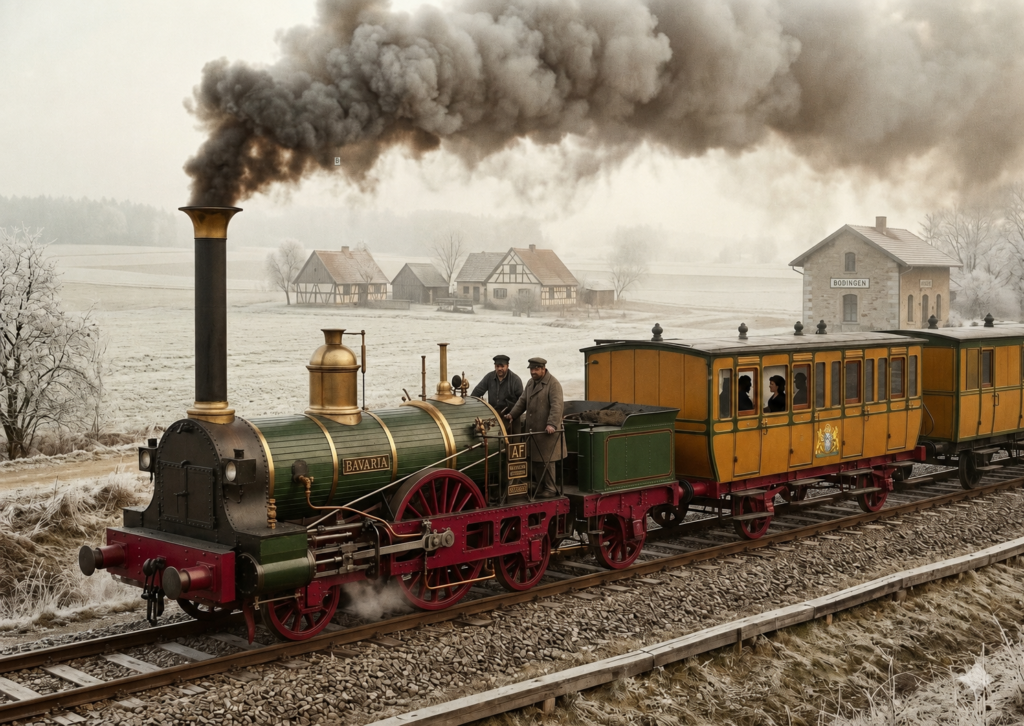
In 1835, when Germany’s first steam railway opened between Nuremberg and Fürth, the fear was that speeds above 30 kilometers an hour would produce Delirium furiosum — a violent brain-madness — in passengers and bystanders alike. The warning was later attributed, plausibly and conveniently, to a Bavarian medical board that never actually existed. It was invented and then repeated so often it passed into folk memory as science.
What was fabricated wasn’t the feeling. It was the diagnosis. Delirium furiosum took an ordinary startle and dressed it up as a permanent injury — a claim that the human mind simply could not adapt, that this particular threshold was different in kind from every other one we’d crossed. No commission ever tested that claim. It didn’t need to be true to spread; it only needed to sound clinical enough to survive contact with people who had no experience yet to check it against.
We are, once again, watching something move faster than we’re entirely comfortable metabolizing, and already there are warnings being minted with the right amount of gravitas to sound clinical. History doesn’t tell us whether this time the fear is warranted. It tells us something more useful and less comfortable: that we won’t know until much later, and that whatever we end up frightened of probably isn’t quite the thing we should have been watching.
In the meantime, the horses are grazing. It took someone’s patience to get them there.